MAI 105 · 2026–27
AI Ethics
A discussion-driven course for analyzing artificial intelligence as a socio-technical system—grounded in philosophy, engineering, law, and critical theory.
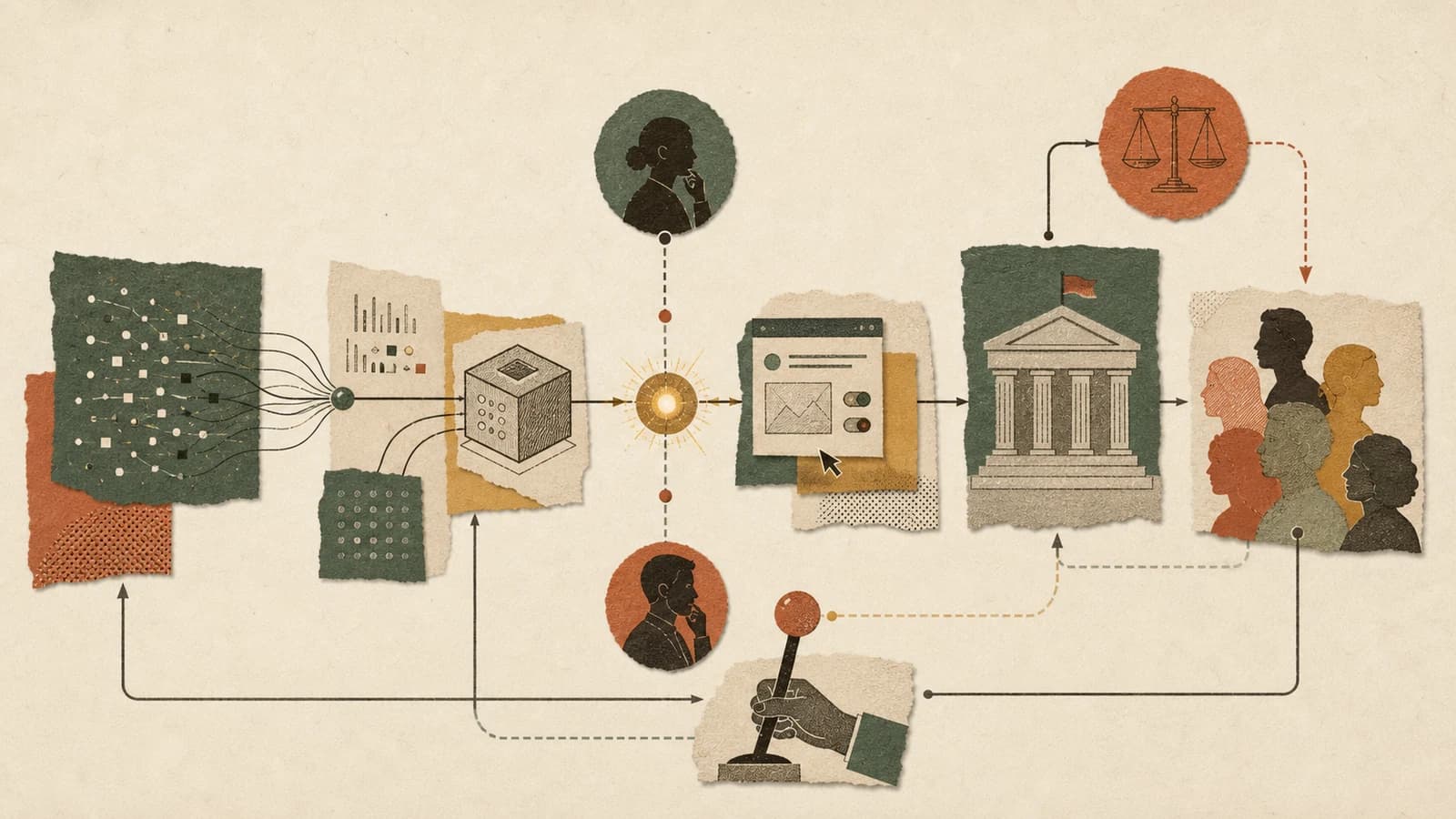
The model is never the whole system. Ethical analysis begins where data, design, institutions, incentives, law, and affected people meet.
The rhythm
Three hours that move.
At least half of every seminar belongs to students. The repeated cadence makes disagreement a practiced skill rather than an accidental moment.
- 01Opening provocation0:00–0:15
- 02Framing I0:15–0:45
- 03Discussion I0:45–1:10
- 04Framing II1:10–1:35
- 05Break1:35–1:45
- 06Case forensics1:45–2:25
- 07Structured controversy2:25–2:50
- 08Synthesis & exit2:50–3:00
The semester
Thirteen weeks. One analytical spine.
3 weeks fully built · 10 seminar shells ready for expansion
Introduction to AI Ethics
ANI, AGI, and the moral landscape
What kind of thing is AI—and who gets to say?
Data Ethics & Bias
Curating datasets and hidden proxies
If the model is a mirror of the data, who curated the reflection?
Algorithmic Fairness
Mathematical definitions of justice
Can justice be a constraint you optimize under—and who chooses the constraint?
Privacy in the Age of AI
The death of anonymity and inference control
If an AI can infer what you never disclosed, what exactly did you consent to?
Responsibility & Accountability
The crisis of agency and the problem of many hands
When everyone touched the system, who is answerable for what it did?
Bias in AI
Sources, impacts, and mitigation
What does it mean to mitigate bias when the institution itself is unequal?
Mid-Course Review
The architecture of ethical analysis
Can you turn seven weeks of concepts into one repeatable audit practice?
Automation & Labor
The future of work and displacement
When AI changes a job, who gets the productivity and who absorbs the transition?
AI in Healthcare
Ethics of diagnosis, treatment, and access
When an AI can improve care for many but fail a few, what does a clinician owe the few?
Explainable AI
Transparency, trust, and the black box
An explanation for whom, faithful to what, and useful for which action?
Generative AI
The crisis of authenticity
When generation becomes cheap, what makes authorship, evidence, and trust expensive?
AI Policy & Governance
The race to regulate and future directions
Can governance keep up without becoming either theatre or a brake controlled by incumbents?
Capstone & Synthesis
Final defense and the future of AI
Can you defend an ethical position under fire about systems that did not exist when the course began?
What students leave with
A way to work the problem.
- 01
Analyze AI systems as socio-technical artifacts, not isolated models.
- 02
Apply multiple ethical frameworks to deployed systems and defend the trade-offs.
- 03
Define and critique fairness criteria, privacy guarantees, and explanation methods.
- 04
Attribute responsibility across AI supply chains and design meaningful accountability.
- 05
Navigate the current governance landscape as a policy-literate practitioner.
- 06
Conduct and defend a complete ethical audit under adversarial questioning.
- 07
Lead rigorous, charitable, evidence-based deliberation with peers.
The room contract
Disagreement is the work product.
A seminar where everyone agrees has not yet found the fault line. The rules make the room rigorous without making it brittle.
- Steelman before you attack.
- Arguments are held lightly; evidence is held tightly.
- The seminar is not a vibe check—give a reason someone else can examine.
- Disagreement is the work product.
- AI tools are permitted instruments and objects of study, with disclosure.
Class is better when the room leaves a trace.
Join with a short code. Vote, post a finding, reply to a classmate, and watch the room move in real time.
Enter the seminar room